The Perfect Routine Myth: Why Practice Plans Need Flex
Flexible practice routines make it easier to keep learning when plans change, with clear ways to decide what to reschedule, shorten or leave out.

Maya arrives at the running track after work to find it closed for maintenance. She has brought her shoes and a plan for technique drills, but there is no safe place nearby to run. A flexible practice routine helps her decide what to do with the evening without turning a blocked session into a debt she must repay.
Maya is an invented example. Her challenge is not how to recreate the workout elsewhere, but how to manage an interruption: reschedule, replace, or let the session go. Those choices depend on the purpose of the practice, the available conditions and what else the week requires.
What should a flexible practice routine decide?
A routine is more useful when it includes a decision rule, not just a time and activity. Maya’s rule might be: run technique drills only on a suitable surface; if the track is unavailable, check whether a safe alternative exists; otherwise, reschedule or rest.
This is different from changing the task to preserve a session at all costs. Some skills depend on a particular setting, and a substitute may not develop the same ability. A routine can stay reliable by making room for a deliberate pause.
Write down the conditions that make a session appropriate, alongside the activity itself.
How should you choose between rescheduling, replacing and resting?
Start by identifying what has actually changed. A calendar clash may leave the practice conditions intact, while a closed facility or unsafe surface may make the planned activity unsuitable. The distinction helps prevent an inconvenient evening from becoming a poor-quality or risky session.
Say Maya’s invented plan is to practise relaxed shoulders during short runs at the track. The track is closed, but a clear, permitted path is available; she checks that it is not crowded or slippery, then chooses an easy run with the same form cue. If the path is wet and busy as well, she decides not to run, records “track closed; path unsuitable”, and moves the session to her next available practice slot rather than adding an extra workout later.
That sequence gives her a specific decision and a record she can use. If the skill cannot be practised appropriately elsewhere, rescheduling is more honest than calling a different activity an equivalent session.
Which details belong in a plan for interruptions?
A short set of rules can make decisions easier when a plan changes. For each item, check the stated condition and follow the matching choice; if it does not apply, use the alternative action.
- Facility: Check whether the planned venue is open and available; if it is, follow the session plan, but if it is closed, check a suitable alternative or reschedule.
- Surface: Check whether the running surface is clear and appropriate; if it is, run as planned, but if it is unsuitable, do not run there and choose another suitable venue or postpone.
- Time: Check whether there is enough unhurried time for the essential activity; if there is, complete the planned session, but if there is not, reschedule or omit it rather than rushing.
- Recovery: Check whether you feel ready for the planned effort; if you do, continue as intended, but if unusual fatigue or illness is present, rest or seek appropriate professional advice if concerned.
- Calendar: Check whether the next planned session already has a place in the week; if it does, return to that plan, but if it does not, choose a suitable open slot instead of doubling up automatically.
- Substitute activity: Check whether the alternative practises the same skill; if it does, use it as a replacement, but if it does not, record it as a different activity and reschedule the original practice if it remains appropriate.
These rules are not a promise that every session will happen. They make the next decision visible, including the option to stop.
How do you keep a disrupted week manageable?
A missed session can create pressure to cram practice into the next available opening. Instead, look at the week as a whole: consider recovery, existing commitments and whether the activity still fits its intended place. If it does not, leave it out and continue with the next planned session.
Imagine Maya’s invented week includes two planned runs, and the first is cancelled because the track is closed and nearby routes are unsuitable. She checks her calendar, sees that the second run already fits her schedule, and keeps it unchanged. The result is one missed practice rather than a rushed extra run that competes with recovery or other commitments.
A simple note can record the reason and the decision: “Venue unavailable; no suitable route; resume with next scheduled run.” This is more useful than treating the missed session as a failure or trying to make up for it without considering the rest of the week.
What questions come up about flexible practice routines?
Should I reschedule every session I miss?
No. Check whether the practice still fits the week and whether you are ready to do it; if it fits, choose a suitable opening, but if it would crowd out recovery or other commitments, leave it out.
Can a different activity count as the same practice?
Only if it develops the intended skill in a relevant way. If an indoor mobility session does not practise running form, record it as mobility and schedule the running practice when suitable conditions return.
What should I write in a training diary?
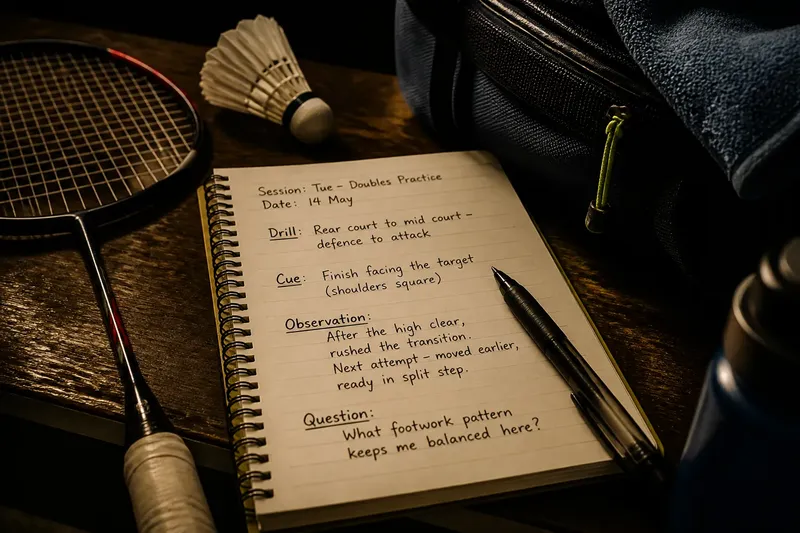
Record the planned activity, the condition that changed and the decision you made. A brief note such as “track closed; no safe route; resume next session” gives you a useful reference without requiring a detailed account.
When should I skip practice altogether?
Skip or postpone when conditions are unsafe, or when illness, pain or unusual fatigue makes the activity a poor choice. For persistent symptoms or uncertainty about returning to sport, seek advice from a qualified health professional or coach as appropriate.
What makes a practice plan dependable?
A dependable plan states what the session requires, what alternatives are genuinely suitable and when to reschedule or stop. For Maya, the closed track is not a cue to improvise at any cost: she checks the route, rejects it when conditions are poor and keeps the next scheduled run intact.
Flexible practice routines are most useful when they include permission to leave a session undone. Add one clear interruption rule to your training diary, such as “If the venue is unavailable and no suitable alternative is open, skip the session and return to the next planned practice.”