One Aim, Three Parts: Giving a Training Session a Shape
A one-aim training session links warm-up, focused practice and review, helping you use your time deliberately while leaving room to adapt.
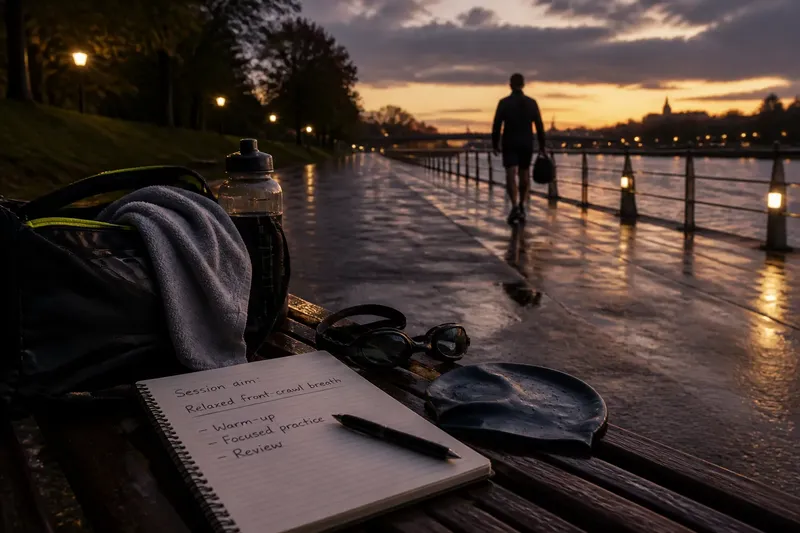
You arrive at the pool with a bag of kit, a short slot before work and several things you could practise. Choosing one aim for the session gives the warm-up, the main practice and the closing review a shared direction, without requiring you to follow a script if conditions change.
A session aim is a specific skill or quality you want to attend to, not a promise about what you will achieve. “Practise a relaxed front-crawl breath” gives you a useful lens for making decisions; “become a better swimmer” is too broad to guide what you do next.
How do you choose one useful session aim?
Start with what you have noticed in recent practice. Perhaps your breathing becomes rushed when you turn your head, your tennis serve loses its rhythm when you try to add power, or your sketching hand presses hard when drawing a curve. Choose one point that is small enough to notice and work on in a single session.
Phrase the aim around an action or sensation you can observe. “Keep the head still as the racket meets the ball” is more useful than “improve my backhand”, because it gives you something concrete to attend to. You do not need to master the action for the aim to have served its purpose.
Check that the aim suits the setting. Available space, equipment, energy and time may rule out an otherwise sensible choice. If a court is crowded, a movement drill that needs a clear lane may not fit; a simpler shadow movement could still give you a way to focus on the same skill.
Write the aim in a few words, or keep it in mind if that feels more natural. Avoid adding a second target “just in case”: extra aims can pull attention in different directions before practice has begun.
What belongs in the warm-up?
The warm-up prepares you to practise the chosen action and gives you a chance to notice how you feel today. It need not be a separate, elaborate routine. Begin with easy movement suited to the activity, then bring in a gentle version of the skill you plan to practise.
For a swimming session about relaxed breathing, that might mean moving easily through the water before taking a few unhurried breaths during simple lengths. For a drawing session about curved lines, it might mean loosening your hand with free marks before drawing curves at a comfortable pace. The warm-up is not the place to judge whether the aim has been achieved.
Use the opening minutes to check whether the plan still makes sense. Notice any unusual discomfort, fatigue, distraction or change in the space or equipment. If the planned action does not feel appropriate, narrow the aim or choose a gentler version; for pain or a concern about health, stop and seek advice from a qualified professional where needed.
Keep the warm-up connected but modest. If it becomes a demanding workout or a long technical lesson in its own right, it can crowd out the focused practice that the aim is meant to guide.
How should you build the focused practice block?
Choose one simple practice task that brings the aim into view. It could be a series of easy serves with attention on the ball toss, a short passage played slowly while listening for an even tone, or a repeated movement performed without adding extra difficulty. Start with a version that lets you pay attention rather than rush to complete it.
Work in manageable stretches, with pauses when attention fades or the movement becomes strained. During each stretch, keep returning to the same cue. If your aim is a steady tennis serve toss, for example, observe whether the ball rises in a repeatable direction rather than trying to fix your toss, foot position, swing and speed all at once.
Notice the difference between what you intended and what happened. You might feel your shoulder lift during a serve or hear a note become uneven near a shift in a musical phrase. Treat the observation as information, not a verdict. Select one adjustment to try next, then give it enough attention to notice whether it changes the action.
Change the task if it stops serving the aim. Make it easier by slowing down, shortening a sequence or reducing the amount of movement. Make it more demanding only if the current version feels controlled and leaves room to focus on the chosen detail. Adjusting the task is not abandoning the aim: the aim can stay steady while the route towards it changes.
Say you have a clear patch of pavement and want to practise a smoother running stride. You begin with easy movement, then use a short stretch of comfortable running to notice whether your steps feel less forced, and pause if your form tightens. If the pavement becomes busy, you move to a safe place and use gentle marching movements to attend to the same relaxed rhythm; the observable result is whether the movement feels easier to repeat, not a claim that your running has been transformed.
How can the session stay flexible?
Keep the aim fixed only while it remains useful. If the room becomes noisy, the pool lane fills, or your concentration is lower than expected, preserve the central skill but reduce the task. A session plan is a guide to attention, not a demand to complete every planned repetition.
It can help to decide in advance what you will change if the original task is unsuitable. For example, you might move from a full movement to a smaller version, from equipment to an unloaded rehearsal, or from a complex sequence to one part of it. Any activity involving equipment or technique should follow the relevant label, manufacturer instructions or local rules where those apply.
Flexibility also means stopping when further practice is no longer helpful. If your form is becoming less controlled, you are losing focus, or discomfort is building, finish the block or switch to an easier activity. The aim is a guide for making the session purposeful, not a reason to push through a warning sign.
What should you review before you finish?
Set aside a brief moment at the end to compare your intention with what you noticed. Ask yourself whether you gave the chosen action attention, what felt easier or harder, and what you would like to try next time. You are looking for a clear observation, not a score for the whole session.
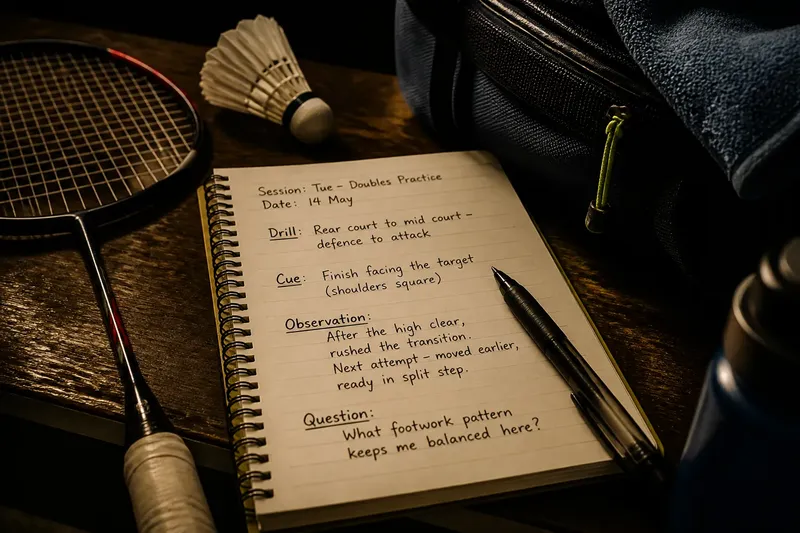
A short note can keep the review practical. Record the aim, the version of the task you used, one observation and a possible next adjustment. “Relaxed breathing; easy lengths; head turn felt rushed after the wall; try a gentler pace” is more useful than “bad session” because it preserves a specific detail for later.
If you prefer not to write, say the observation quietly to yourself or tell a training partner. Keep it factual: “I lost the rhythm when I sped up” leaves more room to make a decision than “I have no rhythm”. The review should take little enough time that it does not become another performance task.
Questions people ask about shaping a session?
How specific should a training session aim be?
Make it narrow enough to guide one practice task, but not so narrow that you can only recognise success in one exact attempt. “Keep my grip relaxed during easy strokes” gives you an observable focus while allowing each stroke to vary.
What if I cannot tell whether the practice is working?
Choose a simpler observation, such as whether the movement feels less rushed or whether you can keep attention on the cue. If the result remains unclear, note that uncertainty and adjust the task next time rather than adding several new targets.
Can I change my aim halfway through?
Yes, if a change in space, energy or comfort makes the original aim unhelpful. Choose one replacement aim that suits the conditions, and use it to shape the remaining practice and review.
How long should the closing review take?
Long enough to name one useful observation and a possible next move. A brief spoken note or a line in a notebook can do this without turning the end of practice into a detailed report.
What makes the three parts work together?
The warm-up prepares you to meet the aim, the focused block gives you a place to practise it, and the review turns what you noticed into a sensible next choice. Each part has a different job, so the session can feel coherent without repeating the same task from start to finish.
For your next training session, choose one action you can observe, let it guide the warm-up, then shape a manageable practice task around it. Finish by recording what you noticed and one adjustment worth considering; that small thread of continuity makes a one-aim training session useful even when the plan has to bend.